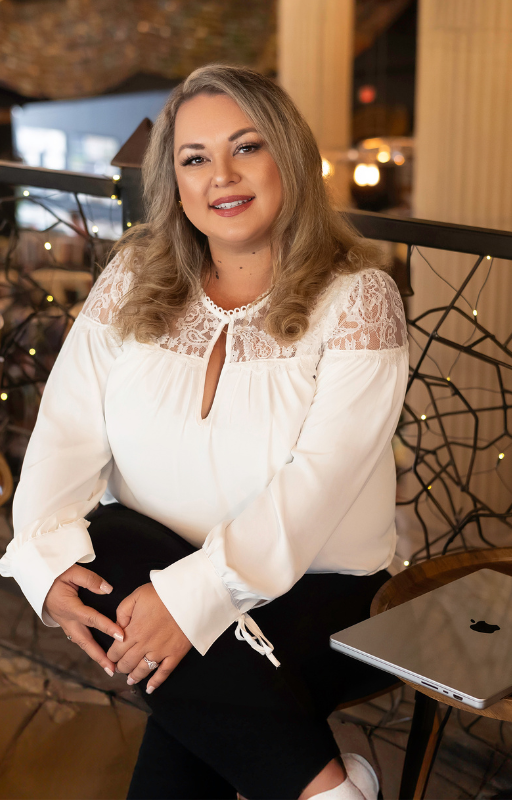
Spotlight on BLOOM Media Co. Client Corry Matthews

Corry Matthews is a fitness, nutrition, and hormone health expert with over 25 years of experience helping women feel strong, confident, and aligned in their bodies. A former professional bodybuilder, Corry is the co-founder of Strength & Grace Fitness, where she coaches women—especially through perimenopause and menopause—on sustainable weight loss and hormone health. She is the co-host of the podcast Seriously, What the 40? and the author of a best-selling gluten-free cookbook focused on hormone balance. In addition to her coaching and education work, Corry promotes three bodybuilding competitions each year and hosts local events for women focused on connection, growth, and thriving. Through coaching, events, and community-building, she empowers women to stop putting life on hold and show up fully.
Personal Story + Origin Questions
What inspired you to start your business/work in your field?
My interest in fitness and nutrition started early. Even in high school, I was fascinated by how the body works—how it moves, how it adapts, and how training and nutrition influence overall health and performance.
That curiosity led me to pursue a Bachelor’s degree in Exercise Physiology and a Master’s degree in Sports Medicine. Throughout my education and career, I worked both inside and outside the fitness industry and also owned a brick-and-mortar nutrition store. Those experiences reinforced something I had always felt: I wanted to work directly with people and help them navigate their own fitness and nutrition journey in a practical, personalized way.
In 2006, I founded Strength and Grace Fitness with the goal of helping individuals improve their health and fitness through one-on-one guidance.
Over time, the business naturally evolved. It expanded beyond personal training to include bodybuilding event promotion, including the shows I produced with my partner Stacia. It also grew to incorporate deeper work in nutrition education, hormone-related lifestyle support for women, and most recently, projects like my cookbook that help make healthy living more practical and accessible.
At its core, the mission has stayed the same: helping people understand their bodies better and giving them the tools to build strength, confidence, and long-term health.
Was there a defining moment that made you realize you were meant to do this work?
Simply the fact that I love all of it. And I would say it was probably when I went to college at 18 and started as a biology major and said - but where is the Anatomy and Physiology classes and they said - you are in the wrong major - so I switched to Exercise Physiology and I knew I was where I was meant to be.
What’s one lesson from your personal or professional journey that has shaped how you show up in your business today?
Almost losing it all with our Max Muscle stores. Those broke me and made me feel like an uter failure…and I learned from a mentor that people can’t be failures, businesses can fail, but that does not make the people who owned them failures, unless they fail to learn from their mistakes.
What’s the story behind your business name/brand name?
The name Strength and Grace Fitness really reflects both my personal journey and the philosophy behind my work.
When my husband and I lived in Okinawa, Japan, I fell in love with the Japanese kanji symbol for strength. Something about it resonated deeply with me, and that idea of strength stayed with me as I began building my career in bodybuilding, fitness, and nutrition.
When I launched my business in 2006, I knew I wanted the name to represent more than just physical strength. As a female business owner working primarily with women, I felt there needed to be another element—something that reflected balance, confidence, and the way women carry themselves both physically and mentally. That’s where the word grace came in.
Even when I was competing as a bodybuilder and focused on building strength and discipline, there was always an element of grace behind it—how you move, how you carry yourself, and how you approach your health and life.
Over the years, that idea has only become more meaningful. Strength is still the backbone of everything I teach—training, resilience, and taking ownership of your health. But grace represents the other side of the equation: respecting your body, adapting through different seasons of life, and especially for women, learning to work with your body rather than against it.
Looking back now, it’s amazing to see how the name has grown with every chapter of my life and business. Strength and Grace has always represented that balance, and it continues to guide everything I do today.
If you could go back to the very beginning of your career, what’s one piece of advice you would give yourself?
If I could go back to the beginning, I would tell myself to keep going—no matter how hard it feels in the moment.
There were many times throughout my career when things felt overwhelming or like they might fall apart. I often think about the concept from the book Three Feet from Gold, which talks about how people often quit just before their breakthrough. Looking back, there were several moments where it would have been easy to stop.
When I was competing in bodybuilding, I dealt with injuries that made me question whether I should continue. But pushing through those challenges ultimately led to earning my pro card. Later, when I opened my nutrition stores, there were times when the business felt like it was failing. But those experiences taught me how to become a better business owner and introduced me to incredible people in the community. Those relationships eventually helped shape the success of my bodybuilding shows and the next stage of my career.
So the advice I would give myself is simple: fail, learn, and keep going. Try, fail, try again—and eventually succeed. Every challenge teaches you something.
One of the best pieces of advice I’ve heard more recently is that the moments that feel the hardest and most suffocating are often the ones right before your biggest breakthroughs. If I had understood that earlier, I might have worried a lot less and trusted the process a little more.
What’s something most people don’t know about your journey to get where you are today?
One thing many people don’t know is that the hardest chapter of my career actually came from something I thought would be one of my biggest successes—owning nutrition stores.
Years ago, I opened several Max Muscle Nutrition franchises. I was confident in my expertise in fitness and nutrition, but the truth is I had never been formally trained in business. I partnered with someone, invested heavily, and over time the situation began to unravel. What I thought would be a strong business opportunity slowly turned into one of the most difficult experiences of my professional life.
By the time we reached 2020 and the COVID shutdowns, the stores had drained an enormous amount of money and nearly bankrupted us. I truly felt like I had failed my family and failed myself as a business owner. Those were some of the lowest and darkest days of my career, and there were moments where I seriously questioned whether I should walk away from the entire fitness and nutrition industry.
But that experience forced me to grow in ways I never expected. It taught me hard lessons about business, partnerships, resilience, and how to rebuild after something falls apart. In many ways, that chapter shaped the direction of everything I’ve done since—from my bodybuilding events to my coaching and educational work.
Looking back now, that period of struggle ended up becoming one of the most important turning points in my career. It pushed me to rethink everything and ultimately helped me build something stronger and more sustainable moving forward.
Thought Leadership + Expert Positioning Questions
What’s the biggest misconception people have about your industry/work?
One of the biggest misconceptions is that because my background is in bodybuilding, people assume my work is about extreme training, strict dieting, or chasing a certain physique.
In reality, what I do is almost the opposite. While bodybuilding was an important part of my journey and taught me a lot about discipline and strength, my work today focuses on helping people build sustainable habits and understand their bodies better.
Fitness and nutrition aren’t just about workouts or meal plans. They’re about learning how to support your body over the long term—especially as life changes. For many of the women I work with, that means focusing on strength, energy, and overall well-being rather than extreme approaches.
At the end of the day, my goal is to help people develop a strong foundation for their health that they can maintain for years, not just for a short-term result.
What’s a piece of advice you find yourself giving to your clients/customers over and over again?
There are three things I repeat to my clients all the time because they make such a big difference in long-term health.
First, reduce your overall consumption of sugar and alcohol. Alcohol ultimately turns into sugar in the body, and excessive sugar intake is one of the biggest drivers of issues like obesity and diabetes. When people begin lowering their sugar intake—even gradually—it can have a huge impact on their health and energy levels.
Second, don’t eat carbohydrates by themselves. I’ve been emphasizing the importance of protein for more than 25 years, long before it became a popular trend again. Pairing carbohydrates with protein or healthy fats helps stabilize blood sugar, improves satiety, and supports muscle maintenance. Protein has always been one of the most powerful tools for helping people lose weight, build strength, and improve body composition.
Third, keep moving. Movement is essential for long-term health. It doesn’t have to be extreme or complicated—walking, strength training, or any form of activity you enjoy can make a difference. But when people stop moving their bodies, many aspects of health begin to decline.
When people focus on these three habits—reducing excess sugar, prioritizing protein, and staying active—they often start seeing meaningful improvements in how they look and feel.
What’s one thing you’ve learned the hard way in your business/career that you wish more people knew?
One thing I’ve learned the hard way is that in the fitness and nutrition industry, there will always be competition and comparison.
It’s very easy to look at what other people are doing—how many followers they have, how big their platforms are, or how fast they seem to be growing—and start questioning whether you’re doing enough. I’m naturally a very empathetic person, and for a long time I found myself constantly comparing my work to others.
Over time, I had to remind myself of something important: people choose to work with you because of what makes you unique. Your experience, your approach, and the way you connect with people is something no one else can duplicate.
That’s something I especially try to share with people who are new to the fitness and nutrition industry. Find your passion, find the niche you care about, and focus on serving those people well. When you genuinely care about the people you’re helping, that connection matters far more than numbers or social media metrics.
At the end of the day, people don’t just want information. They want to know that the person helping them actually cares about them as individuals and not just as another client or follower.
What do you believe sets you apart from others doing similar work?
My story…It’s not like I was always this super skinny fit person…over the years I have worked for it, and so I truly can empathize with me clients and understand what they are going through. I generally care so much for my clients, and I love educating them. Getting them to the point that one day they don’t need me and they can do it all on their own is amazing…that is true success for me. And my background is so different…pro bodybuilder, military family, hormone health…its unique!
If you had a microphone to reach millions of people, what’s the message you’d share?
That women can not hide behind their health. If they are overweight or dealing hormone problems, they have to fix it, because if they don’t the world will never to experience the unique thing that, that one person brings to the world. So many women do this in their 40’s, they say Corry - I am overweight, I hide from photos, I don’t do the pool with my kids, i don’t stand up at work, so I tell them they have to fix their health so they can change the damn world.
What’s the biggest challenge you’re seeing your clients/customers face right now, and how are you helping them navigate it?
One of the biggest challenges right now is the growing belief that weight loss has suddenly become easy because of medications like GLP-1s, such as Ozempic or Wegovy.
These medications can absolutely be helpful tools for some people, especially those who have struggled with weight for years. But one of the biggest misconceptions is that they replace the need for the foundational work of health.
The reality is that improving your health has never been easy, and it still requires effort. Even with new tools available, people still need to build strong habits around nutrition, strength training, and overall lifestyle if they want long-term results and real health benefits.
What I help my clients understand is that these medications can be a tool—but they’re not the solution by themselves. If someone doesn’t address their nutrition, fitness, and daily habits, the long-term results simply won’t be there.
So my focus is helping people build that foundation. We work on improving nutrition, strengthening the body through training, and creating sustainable routines that support long-term health. The goal is to help people feel stronger, healthier, and more confident in their bodies—so they’re not dependent on a medication, but instead have the knowledge and habits to take care of themselves for life.
At the end of the day, there’s no shortcut around the work. The tools may change, but the fundamentals of health remain the same.
What’s one unpopular opinion you have about your industry?
One of my more unpopular opinions is that our culture has become increasingly focused on shortcuts when it comes to health.
There are more tools than ever available today—from new medications to quick-fix programs—and while some of those tools can absolutely help the right people, they’ve also created the impression that getting healthy should be fast and effortless.
The truth is that improving your health has never really worked that way. Even with helpful tools available, you still have to build the foundation: better nutrition, regular movement, strength training, and daily habits that support your body.
I do believe there are people who genuinely benefit from newer medical tools, especially when they’re struggling with serious metabolic or health challenges. But what concerns me is when those tools are used as a substitute for building healthier habits rather than as support alongside them.
Health trends also tend to move in cycles. We’ve seen periods where extreme thinness was the goal, and later we start seeing the long-term consequences—things like loss of muscle, bone density issues, and other health concerns.
My perspective is that real, lasting health still comes from doing the foundational work. The good news is that it doesn’t have to be miserable. You can eat great food, find movement you actually enjoy, and build habits that fit your life.
But at the end of the day, there’s no true shortcut around caring for your body.
Media Readiness + Visibility Questions
Why do you think your story or expertise is valuable to the media right now?
Right now there is a huge cultural conversation happening around women’s health, especially for women in their 40s and 50s. For the first time, topics like hormones, metabolism, muscle loss, and menopause are being openly discussed in the media. But what many women are realizing is that the advice they have followed for decades—eat less, exercise more—simply stops working in midlife.
My story matters because I sit at the intersection of personal experience and professional expertise.
I’ve spent more than 25 years in the fitness and nutrition industry. I hold a master’s degree in sports medicine, competed as a professional bodybuilder, and have coached thousands of women through health and fitness transformations. From the outside, it looked like I had everything figured out when it came to health.
But like many women, I experienced my own turning point in midlife.
I had a moment at the beach with my daughter that forced me to confront something uncomfortable. Despite building my career around helping women feel strong and confident in their bodies, I had slowly started hiding in my own. My body had changed, my hormones had shifted, and the strategies that once worked no longer did.
That moment pushed me to dive deeper into understanding what really happens to women’s bodies after forty—from hormone changes to metabolism shifts to the critical role of strength training and muscle mass in long-term health.
What I discovered changed not only my own health, but the way I coach women today.
My work now focuses on helping women stop blaming themselves for changes in their bodies and instead understand the science behind those changes so they can work with their bodies instead of fighting against them.
At a time when conversations about menopause, longevity, and women’s health are finally gaining attention, my story helps bridge the gap between the science and real life. It shows that even someone who spent a lifetime in fitness had to rethink everything she thought she knew—and that midlife is not the beginning of decline for women, but an opportunity to reclaim strength, confidence, and visibility in their lives.
More than anything, the message I want women to hear right now is this:
Midlife is not the moment to start shrinking your life.
It’s the moment to stop hiding and step fully into it.
If you could land a feature in any media outlet, which one would be a dream come true — and why?
The Today Show…I’ve watched this show since I was a kid…and I absolutely love the way they talk about health and the trends and what is going on. I want to talk to the women over 40 and show them my recipes and how yummy and good they are, and how the whole family will eat them.
Other one would be the Magazine Woman’s World - its exactly my demographic for all the reasons I put in #21 and on every magazine it says God Bless America which 1000% aligns with my values!
What’s one topic you feel uniquely positioned to speak about in the media?
Hormones and how it ties into weight
Have you had any past media features or speaking engagements? If so, which was your favorite and why?
Anything tv / interview is always my favorite. I do believe I am good at speaking, and I think how much I care about my work and the women that I help really comes through when people get to hear and see me.
What’s a headline you’d love to see written about you or your business?
From bodybuilding to menopause and everything between - Corry’s got your back!
If you were invited to speak on a major podcast or TV show tomorrow, what’s the core message you’d want to share?
That women can not hide behind their health. If there is something about their health (and for the majority of the women I work with its their weight related to hormone changes) then they have to fix it. Their family, their career and the rest of the world needs women to not diminish their brilliance because of something going on with their health. Do the work and get help.
How do you hope being featured in the media will impact your business or mission?
Allow me to connect and meet more women to put their health front and center, so things like the obesity epedemic decreases and women’s overall confidence increases.
What’s one question you wish interviewers would ask you — and how would you answer it?
Why GLP’s took off the way they did…or any other weight loss drug for that much - and its because people want something to make things easy, they are afraid of doing the hard work, but everything hard, that you have to work for, is so worth having and YOU KEEP IT! My clients lose the weight and keep it off because they learn about nutrition, fitness and hormones.
What’s something you’ve been dying to share publicly but haven’t had the platform to do so yet?
My recipes, and the way I have women eat to balance their hormones. Our cookbook is the first step, but if people don’t know about it…its not helping that many women!
What do you want people to remember most about you and your work?
That Corry was all about educating women to live better lives by balancing their hormones, losing weight and thriving!
Fun + Personality-Driven Questions
What’s your morning routine or daily ritual that keeps you grounded?
Up early…by 6am…have warm water with ½ the juice of a lemon and pinch of cayenne pepper while walking my dog. Then its home to coffee with collagen, protein and home made almond milk - get the kids ready - then lift weights!
What’s one song that would be the soundtrack of your life right now?
I Lived by One Republic
If you could have dinner with any 3 people (living or deceased), who would you choose and why?
My father - he passed away when i was only 7; I would love to know what he thought of me and my life
Mel Robbins - this woman I attribute to saving my life…when I was at my lowest point - when I had just turned 40, and had no idea why everything was changing and yet my own nutrition and fitness hadn’t her The 5 Second Rule and Kick Ass Audible book bascially called me out for being a hypocrite and not healthy and I decided I was gonna do everything I could to be healthy…and I did.
Taylor Swift - I think she is one of the greatest business woman of all time!
What’s your guilty pleasure when you need to unwind?
TV…it get my mind off of reality…and if its watching it and walking on my treadmill - bonus!
What’s one book, podcast, or piece of content that has had a profound impact on you?
The book 3 Feet from Gold by the Napolean Hill Foundation - and its all about how you can’t quit when you are only 3 feet from gold…and quite frankly I feel like this is EXACTLY where I am at right now.
What’s your personal mantra or quote you live by?
Do or Do Not - there is no such thing as TRY!
If you weren’t doing this work, what’s an alternate career you’d love to pursue?
Medicine or Marine Biology
How do you stay inspired when things get tough in your business?
I’ve always made it through tough things…and I can make it through this too! I also have business mentors / friends who I turn to, that I can talk through the things going on in my business…plus my hubby is pretty business savvy as well.
What’s one thing on your personal or professional bucket list right now?
Getting to 25K followers
Call-to-Action Questions (Great for Visibility)
Where’s the best place for people to connect with you or learn more about your work? Instagram @corrymatthews or Facebook @corry.matthews or my website www.corrymatthews.com
What’s the #1 thing you want people to know about your work/business right now? When you are struggling with your weight, especially in your 40’s…I am your gal to talk with. Even if working with me isn’t the right step for you, I will help you navigate what is your best right step.
How can people support you or your mission today? Share all my content with the women you love and respect. Many times we all struggle in silence until we know there are others out there like us and willing to help with answers.
Do you have any upcoming launches, events, or news you’d like to share?
We have a huge event coming up on October 8th in the South Bay that is all about empowerment for women both in fitness/nutrition and business. We’re bringing in nationally recognized speakers and sponsors, and in addition to these powerful sessions we will have incredible networking.
We’ve got 3 bodybuilding shows this year…
NPC Virginia Classic 4/25
NPC All Natural Clash of the Titans 7/25
NPC Mid Atlantic / Armed Forces and the NPC Va State (basically 3 shows in one) 11/7
What’s the best way someone can collaborate or partner with you?
Email me at info@strengthandgracefitness.com